
Carney Unveils Plan to Double Canada’s Non-U.S. Exports as Budget Promises ‘Generation-Defining’ Change
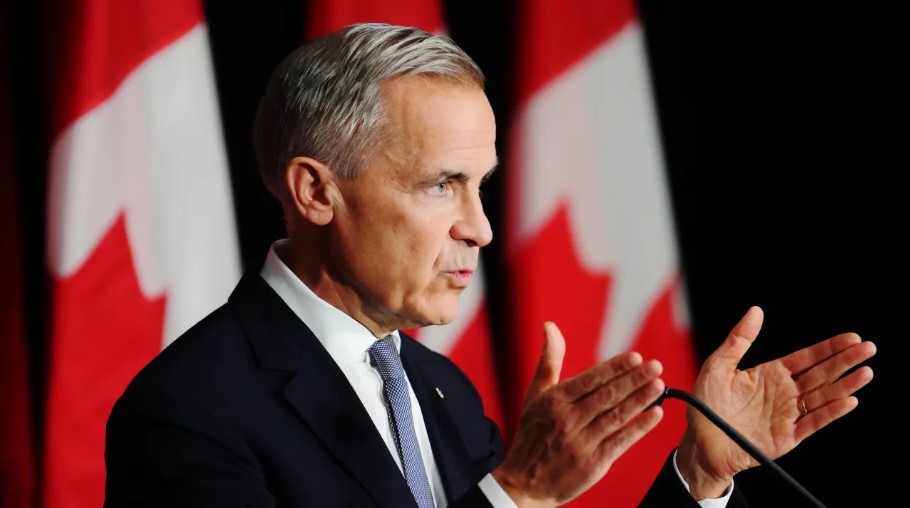
In a decisive pre-budget speech at the University of Ottawa, Prime Minister Mark Carney outlined a sweeping vision to reshape Canada’s economy, announcing plans to double the country’s non-U.S. exports within the next decade and embark on what he described as a “generation-defining” wave of investments.
Carney said the new direction marks a clear break from decades of deep economic integration with the United States, calling the shift both necessary and overdue. “The decades-long process of an ever-closer economic relationship with the United States is over,” he said. “Many of our former strengths, based on proximity and close ties to America, have now become vulnerabilities.”
A New Trade Strategy
The government’s new trade agenda is designed to lessen Canada’s reliance on the U.S. market by forging stronger ties with Europe, Asia, and emerging economies. Carney said his government is targeting an additional $300 billion in trade outside the United States, emphasizing that diversification is essential in a world defined by geopolitical uncertainty and rising protectionism.
While the United States will remain a critical partner, the prime minister said Canada must “look outward and build new bridges” to secure long-term prosperity. He stressed that global shifts in manufacturing, technology, and supply chains require Canada to adapt quickly or risk being left behind.
Budget Priorities: Infrastructure, Housing, and Defence
Carney described the upcoming federal budget — set for release on November 4 — as a blueprint for the next generation of growth. It will focus heavily on nation-building investments, including infrastructure, housing, defence modernization, and workforce training.
“These will not be incremental measures,” he said. “We are swinging for the fences — building the foundations of a bigger, better Canada.”
Housing remains a top priority, with new funding expected to support construction, accelerate building approvals, and address the nationwide shortage. The government also plans to launch a new agency, Build Canada Homes, tasked with coordinating housing projects between provinces and municipalities.
Fiscal Discipline and Sacrifices Ahead
Despite the ambitious tone, Carney acknowledged that the country is facing difficult fiscal realities. The federal deficit is projected to reach one of its highest levels in decades outside of recession periods. He said that while the government will protect key programs such as child care, dental care, and the national school food program, other spending areas may need to be re-evaluated.
“The simple truth is that we’ve been spending more than the economy has been growing,” he admitted. “To restore balance, we’ll all need to make some sacrifices.”
Economists say the challenge will be balancing these long-term investments with fiscal responsibility — particularly in an environment of high borrowing costs and global uncertainty.
Talent, Immigration, and Future Skills
Carney also emphasized the importance of preparing Canadians for the future economy. A new talent strategy will focus on science, technology, and innovation to ensure that Canada can compete globally.
He noted that immigration targets will be more closely aligned with housing capacity and labour market needs to prevent additional pressure on affordability. “We will continue to welcome newcomers, but we will do so responsibly,” Carney said.
Implications for Business and Trade
For Canadian businesses, the announcement represents both opportunity and challenge. Companies that have long depended on U.S. customers may need to pivot toward new international markets, strengthen logistics networks, and form partnerships in Asia-Pacific and Europe.
Trade experts say the shift could boost Canada’s resilience against U.S. protectionism and global supply-chain disruptions but warn that building new markets will take time and investment.
Looking Ahead
The upcoming budget is widely expected to define the government’s economic direction for the remainder of the decade. Investors, economists, and global partners will be watching closely to see how Ottawa balances its expansionary vision with fiscal discipline.
For Carney, the speech was not just a policy preview — it was a call to redefine Canada’s place in the world. “This is a moment to think big,” he said. “We can build a Canada that is more independent, more ambitious, and ready for the future.”